


96' Blazer with hesitation and misfires


Thread Starter
|
Starting Member
Joined: May 2016
Posts: 200

 96' Blazer with hesitation and misfires
Morning,
I thought I'd start a fresh thread for this.
I have already done quite a bit of work and replaced a number of parts plus several more parts were replaced before I purchased this ride.
So, here's my newest issue.
I finally got the cmp retard offset corrected and seemed to run fine. Then I started noticing the miss and hesitation when starting off again, just like the same problem it's had all along. I'm wondering about the coil and, even though the pump/regulator was replaced b4 I bought it, I'm going to check the fuel pressure next.
Yesterday, I was leaving and my dog was chasing me down the driveway, I romped it a little to outrun her and it died. It would not start back up, at least not right away, it started about 3 minutes later and I drove it to my destination. That's actually the first time that has happened.
Kinda disappointing after all I've done to it.
Any Ideas?
Thanks
I thought I'd start a fresh thread for this.
I have already done quite a bit of work and replaced a number of parts plus several more parts were replaced before I purchased this ride.
So, here's my newest issue.
I finally got the cmp retard offset corrected and seemed to run fine. Then I started noticing the miss and hesitation when starting off again, just like the same problem it's had all along. I'm wondering about the coil and, even though the pump/regulator was replaced b4 I bought it, I'm going to check the fuel pressure next.
Yesterday, I was leaving and my dog was chasing me down the driveway, I romped it a little to outrun her and it died. It would not start back up, at least not right away, it started about 3 minutes later and I drove it to my destination. That's actually the first time that has happened.
Kinda disappointing after all I've done to it.
Any Ideas?
Thanks

Moderator
Joined: Oct 2014
Posts: 4,336
From: North Central Indiana
Sorry to hear that! What you are describing now sounds like fuel to me. Be sure to follow the sticky at the top of this forum. Also now you have a scan tool to monitor if it's going lean and if it is a particular cylinder or cylinders. Plus you have a lot more experience and understanding. I predict you will have your problem whipped in short order.
Thread Starter
|
Starting Member
Joined: May 2016
Posts: 200
Hey less, seems like my misfire gauges might not be accurate. Would you mind posting the info for those, or rather one. I thought I had them set but they're not registering anything. Wondered if I did them right.
Later
BTW, no hurry on the gauges, hell man its a Holiday!
Later
BTW, no hurry on the gauges, hell man its a Holiday!
Moderator
Joined: Oct 2014
Posts: 4,336
From: North Central Indiana
Hey less, seems like my misfire gauges might not be accurate. Would you mind posting the info for those, or rather one. I thought I had them set but they're not registering anything. Wondered if I did them right.
Later
BTW, no hurry on the gauges, hell man its a Holiday!
Later
BTW, no hurry on the gauges, hell man its a Holiday!
Let me know if closing the screen and opening it again (repeatedly if necessary) works for you.
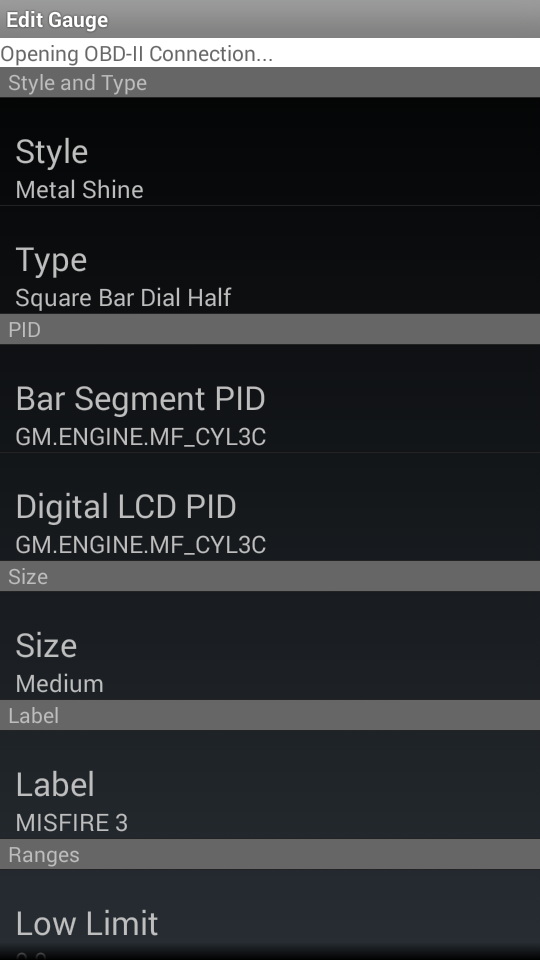
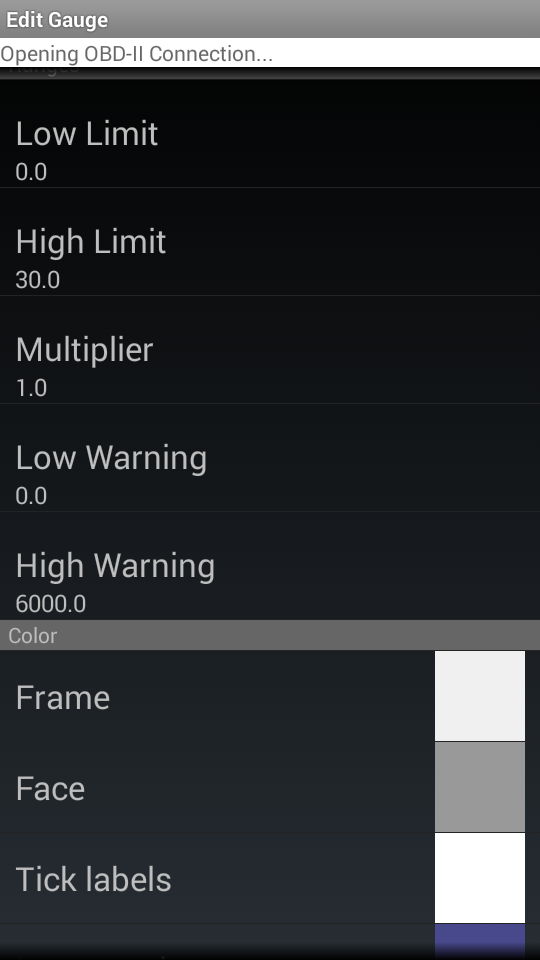
Last edited by LesMyer; Jul 4, 2016 at 07:22 PM.
Thread Starter
|
Starting Member
Joined: May 2016
Posts: 200
Okay, rented a fuel pressure test kit from O'reilly's. Tested at the schrader valve before the fuel injector. The 2 second prime took 4 or 5 times to get up to the pressure.
The pump seemed to max out at 60 psi, I could see the gauge flicker at 60 psi each time the pump would kick off or stop when it reached 60 psi. Anyway, once at 60 psi and I would shut the key off, the psi would drop to 55 psi and after 10 minutes it would bleed to 51 or 52 psi. I was going to check in front of the filter but the kit only has an inline adapter so it will probably read the same. Since I've already replaced the fuel injector and the regulator I'm assuming it's the fuel pump....dang.
I'm fairly certain that the mechanics that replaced it before I bought it used off brand parts. I've already run into that with the work they did on other parts.
Later
The pump seemed to max out at 60 psi, I could see the gauge flicker at 60 psi each time the pump would kick off or stop when it reached 60 psi. Anyway, once at 60 psi and I would shut the key off, the psi would drop to 55 psi and after 10 minutes it would bleed to 51 or 52 psi. I was going to check in front of the filter but the kit only has an inline adapter so it will probably read the same. Since I've already replaced the fuel injector and the regulator I'm assuming it's the fuel pump....dang.
I'm fairly certain that the mechanics that replaced it before I bought it used off brand parts. I've already run into that with the work they did on other parts.
Later

Junior Member
Joined: Apr 2016
Posts: 325
From: North GA, USA
Those pressures sound fairly normal for measurements at the Schrader valve. It shouldn't take "4 or 5 times," though. Was it building slowly? Or did you get nothing at all on the first few key cycles?
You also need to check maximum fuel pump outlet pressure at the fuel filter, either at the outlet of the fuel filter, or hook the gauge to the line from the fuel pump at the inlet to the filter. The kit from O'Reilly's should have a fitting that works. I always test at the inlet, and I use the 10 minutes waiting for the leak-down result to replace the fuel filter unless I know it's relatively new and good. Others here test at the outlet of the filter. For that test, the fuel goes to the gauge instead of the engine (and the pressure regulator). Again, get the pressure reading after priming, and 10 minutes later to check for leak-down.
I'm sure Captain Hook will be along with the exact numbers, but I think it's supposed to be over 70-something PSI (maybe 74PSI).
You also need to check maximum fuel pump outlet pressure at the fuel filter, either at the outlet of the fuel filter, or hook the gauge to the line from the fuel pump at the inlet to the filter. The kit from O'Reilly's should have a fitting that works. I always test at the inlet, and I use the 10 minutes waiting for the leak-down result to replace the fuel filter unless I know it's relatively new and good. Others here test at the outlet of the filter. For that test, the fuel goes to the gauge instead of the engine (and the pressure regulator). Again, get the pressure reading after priming, and 10 minutes later to check for leak-down.
I'm sure Captain Hook will be along with the exact numbers, but I think it's supposed to be over 70-something PSI (maybe 74PSI).
Last edited by Racer_X; Jul 8, 2016 at 09:50 PM.
Junior Member
Joined: Apr 2016
Posts: 325
From: North GA, USA
Seems like mine was in the upper 40's when idling.
Pull the low voltage connector at the coil and watch the gauge as the engine is cranked. It must stay above 50psi (if you've upgraded to the later injector assembly, I think it should be about 55psi) when the engine is "cranking" on the starte but not running.
When it starts, the absolute pressure goes down (vacuum gauge rises) in the manifold, and the regulator will reduce the system pressure. If you "snap" the throttle open for a second, the fuel pressure should spike when the absolute pressure in the manifold spikes (or when a vacuum gauge falls). Fuel pressure should always be above 45-48psi, no matter the vacuum level or load conditions.
For the pump itself, there are two tests. Pump straight into the fuel pressure gauge, and you should get at least 70-80psi, and higher is better. You can also disconnect the return line and hook a hose from the return line into a container. With the fuel pump relay jumpered, the fuel pump must pump at least a quart of fuel in 30 seconds (or a pint in 15 seconds if your container is smaller). If the pump fails either pressure or volume, replace it.
Pull the low voltage connector at the coil and watch the gauge as the engine is cranked. It must stay above 50psi (if you've upgraded to the later injector assembly, I think it should be about 55psi) when the engine is "cranking" on the starte but not running.
When it starts, the absolute pressure goes down (vacuum gauge rises) in the manifold, and the regulator will reduce the system pressure. If you "snap" the throttle open for a second, the fuel pressure should spike when the absolute pressure in the manifold spikes (or when a vacuum gauge falls). Fuel pressure should always be above 45-48psi, no matter the vacuum level or load conditions.
For the pump itself, there are two tests. Pump straight into the fuel pressure gauge, and you should get at least 70-80psi, and higher is better. You can also disconnect the return line and hook a hose from the return line into a container. With the fuel pump relay jumpered, the fuel pump must pump at least a quart of fuel in 30 seconds (or a pint in 15 seconds if your container is smaller). If the pump fails either pressure or volume, replace it.

